
Indiana's climate is tough on home exteriors. Humid summers breed mold and algae. Freeze-thaw cycles push grime into every crack. Most homeowners in the Fort Wayne and Decatur area are washing their siding far less often than they should be.
What Is Actually Growing on Your Siding?
Those green and black streaks are not just dirt. They are living organisms.
- Green buildup is algae, which thrives in Indiana's warm, humid summers.
- Black streaking is usually Gloeocapsa magma, a cyanobacteria that feeds on limestone filler in asphalt shingles and washes down onto siding during rain.
- White chalky residue is oxidation from UV exposure.
- Yellow-brown film is pollen, which is especially heavy in Indiana springs.
Left untreated, biological growth eats into paint and sealants. Oxidation dulls the surface and degrades the material over time.
Washing Schedule by Siding Type
The material matters. Here is what we recommend for the most common siding types in the Decatur and Fort Wayne area:
Signs Your Siding Needs Washing Now
Do not wait for the calendar if you notice any of these:
- Visible green or black streaking on the surface
- A chalky residue that comes off when you rub it
- Dark staining around gutters or downspouts
- A general dullness that makes the house look older than it is
Any of these is a signal to schedule a wash before the problem gets worse.
Soft Wash vs. Pressure Wash for Siding
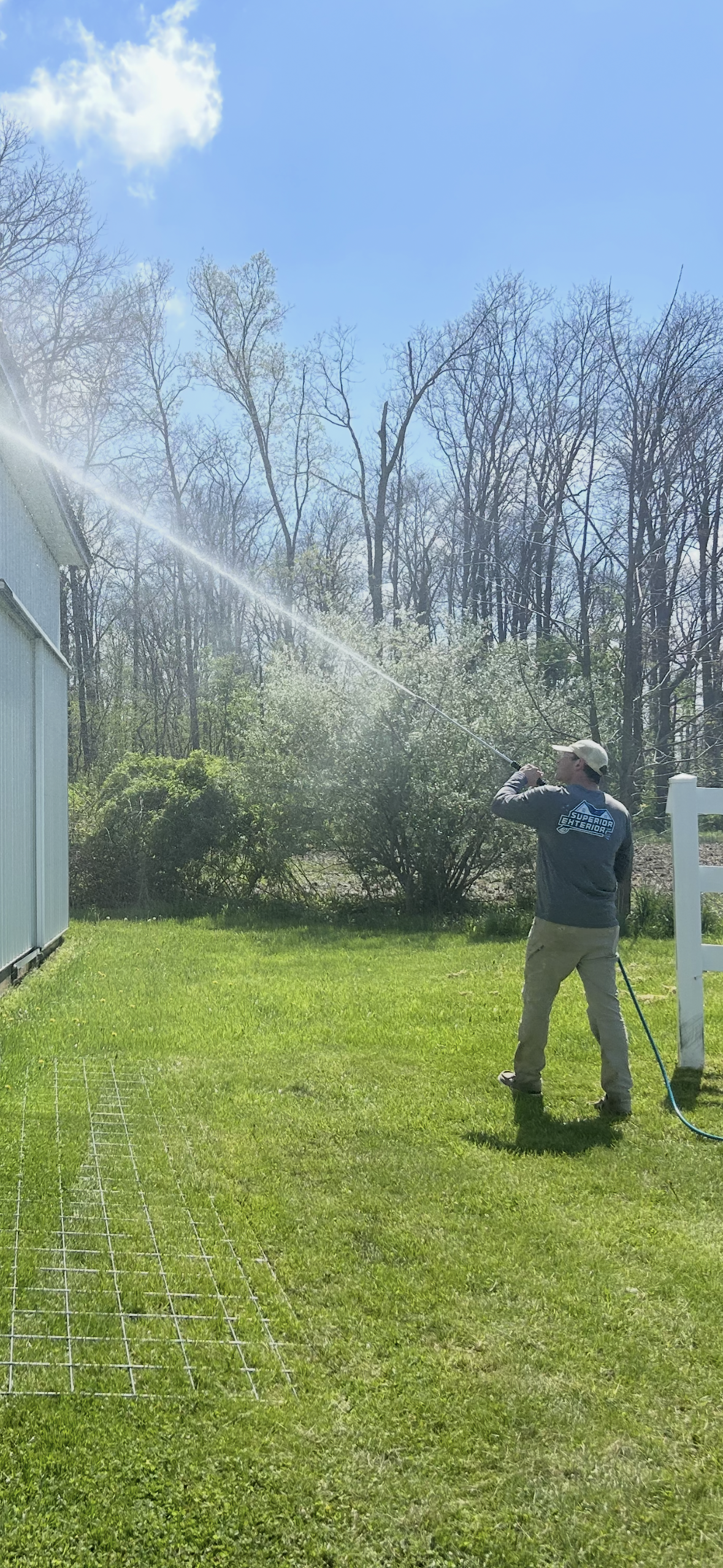
For siding, soft washing is almost always the right choice. Here is why:
- High-pressure washing can force water behind panels and damage paint
- Soft washing uses a low-pressure cleaning solution that kills biological growth at the root
- Results last longer because the organisms are killed, not just blasted off
 The Best Time of Year to Clean Your Driveway in Fort Wayne